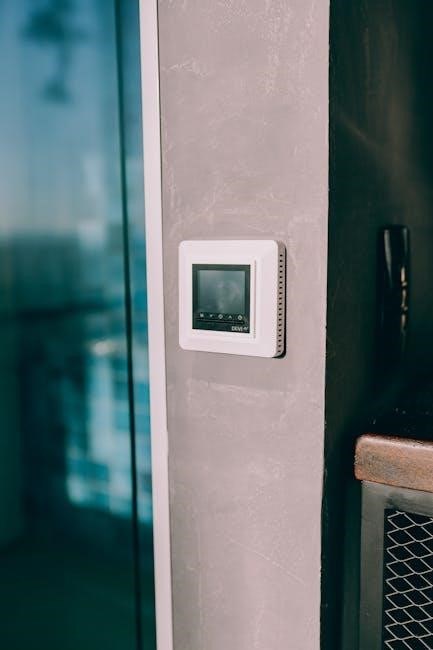
Lifebreath Digital Wall Control Manual: A Comprehensive Guide
Today’s date is 02/18/2026 17:59:18 (). This manual provides detailed instructions for installing, operating, and troubleshooting your Lifebreath digital wall control, ensuring optimal indoor air quality.
Lifebreath Digital Wall Controls represent a significant advancement in home ventilation management, offering users precise control over indoor air quality. These controls are designed to work in conjunction with a main ventilation system, allowing for customized airflow settings to suit individual preferences and home requirements. The operational modes and fan speeds – Hi1, Hi2, and Hi3 – enable adjustments to ventilation rates, optimizing comfort and air freshness.
Understanding the capabilities of your Lifebreath control is key to maximizing its benefits. The system’s functionality is dependent on the main control unit installed, offering a range of possibilities. For detailed airflow rates associated with each fan speed, please consult the specification page available online at www.lifebreath.com. Regularly checking www.LIFEBREATH.com ensures access to the latest product information and support resources.
Understanding the Control’s Purpose & Benefits
The primary purpose of the Lifebreath Digital Wall Control is to provide convenient and precise management of your home’s ventilation system. By adjusting ventilation levels, you can significantly improve indoor air quality, reducing pollutants and maintaining a comfortable living environment. Experimenting with different settings allows you to discover the ideal balance between fresh air intake and energy efficiency, tailored to your specific home and personal needs.
Benefits include enhanced comfort, reduced allergens, and improved overall health. The control’s integration with your Windows PC via the Phone Link app offers potential for future software control enhancements. Maintaining the latest Windows version and updates is crucial for optimal system performance, potentially resolving issues like slow boot times or iPad connectivity problems.
Installation & Mounting
Securely mounting the control involves marking screw holes, attaching the back plate with supplied hardware, and then carefully connecting the face plate for operation.
Locating the Ideal Mounting Position
Choosing the right location is crucial for optimal usability and aesthetics. Consider a central area within your living space, easily accessible for adjustments, yet discreet enough to avoid accidental bumps or interference. Ensure the chosen spot is within reach of existing wiring, minimizing the need for extensive cable runs.
Avoid areas exposed to direct sunlight, moisture, or extreme temperatures, as these can affect the control’s performance and longevity. Maintain a clear line of sight to the control from frequently used areas of the room. Before final installation, use the back plate as a template to visualize the placement and confirm it doesn’t obstruct doorways, furniture, or other fixtures. Pencil mark the top and bottom screw holes for accurate attachment;
Attaching the Back Plate to the Wall
Securely mounting the back plate is fundamental to a stable and reliable installation. Begin by carefully aligning the back plate with the pencil marks created during the location assessment. Utilizing the supplied screws and anchors, initiate the attachment process. For drywall installations, pre-drill pilot holes using a drill bit slightly smaller than the anchor diameter to facilitate easy insertion and prevent cracking.
Insert the anchors fully into the pre-drilled holes, ensuring they are flush with the wall surface. Then, drive the screws through the back plate and into the anchors, tightening them until the plate is firmly secured against the wall. Avoid over-tightening, as this could damage the plate or the wall. Double-check the stability of the back plate before proceeding to the next step.
Connecting the Face Plate
With the back plate securely mounted, the next step involves attaching the face plate to complete the control assembly. Carefully align the face plate with the corresponding slots or guides on the back plate. Gently push the face plate onto the back plate until it clicks into place, indicating a secure connection. Refer to Figure A (detailed in accompanying documentation) for a visual guide to ensure proper alignment and attachment.
Verify that the face plate is flush with the back plate and that there are no gaps or misalignments. A snug fit is crucial for maintaining the aesthetic appeal and functionality of the control. Once connected, test the face plate’s stability by applying gentle pressure to ensure it remains firmly attached to the back plate.
Operational Modes & Settings
Lifebreath controls offer adjustable ventilation rates for personalized comfort. Available modes and speeds—Hi1, Hi2, Hi3—depend on your main control unit’s capabilities.
Available Operational Modes (Dependent on Main Control)
The operational modes accessible through your Lifebreath digital wall control are directly determined by the main control unit installed in your ventilation system. These modes allow for customized adjustments to your indoor ventilation rate, catering to diverse needs and preferences. Experimentation is encouraged to discover the ideal balance between fresh air intake and energy efficiency within your home environment.
Depending on your system configuration, you may have access to modes such as continuous operation, intermittent ventilation, or humidity-controlled settings. The available fan speed settings – Hi1, Hi2, and Hi3 – further refine the ventilation levels. Detailed airflow rates corresponding to each fan speed are readily available on the official Lifebreath website at www.lifebreath.com, within the specification pages for your specific model.
Understanding the capabilities of your main control is crucial for maximizing the benefits of your Lifebreath system. Refer to the documentation accompanying your main control unit for a comprehensive overview of its features and functionalities.
Fan Speed Settings: Hi1, Hi2, Hi3
Your Lifebreath digital wall control offers three distinct fan speed settings: Hi1, Hi2, and Hi3, allowing precise control over your ventilation system’s performance. These settings directly impact the airflow rate and, consequently, the level of fresh air introduced into your home. The factory default setting is Hi3, providing maximum ventilation upon initial installation.
However, adjusting these speeds is key to optimizing comfort and energy efficiency; Hi1 represents the lowest speed, suitable for maintaining a gentle airflow, while Hi2 offers a moderate ventilation rate. Hi3 delivers the highest airflow, ideal for quickly refreshing indoor air or addressing specific air quality concerns.
For precise airflow rate specifications for each setting – Hi1, Hi2, and Hi3 – please consult the detailed specification pages available online at www.lifebreath.com. These resources will help you determine the optimal fan speed for your individual needs and home environment.
Adjusting Ventilation Rates for Optimal Comfort
Achieving optimal comfort with your Lifebreath system involves carefully adjusting ventilation rates to suit your home and personal preferences. The available operational modes and fan speeds – Hi1, Hi2, and Hi3 – are designed to provide a customizable ventilation experience. Experimentation is encouraged to discover the ideal balance between fresh air intake and energy conservation.
Consider factors like the size of your home, the number of occupants, and your local climate when determining appropriate ventilation levels. Higher ventilation rates are beneficial for removing pollutants and maintaining air freshness, while lower rates can help conserve energy.
Remember that the modes of operation and speeds work together to regulate your indoor ventilation. Regularly evaluate your home’s air quality and adjust settings accordingly to ensure a comfortable and healthy living environment. Refer to www.LIFEBREATH.com for further guidance.

Technical Specifications & Resources
Access detailed specifications online at www.lifebreath.com. Airflow rates vary by fan speed (Hi1, Hi2, Hi3); consult the website for specific performance data.
Accessing Specification Pages Online (www.lifebreath.com)
For the most current and comprehensive technical information regarding your Lifebreath Digital Wall Control, please visit our website at www.lifebreath.com. This online resource provides access to detailed specification pages, including precise airflow rates for each fan speed setting – Hi1, Hi2, and Hi3. These pages are regularly updated to reflect the latest product enhancements and performance data.
You’ll find crucial information about the control’s operational capabilities, compatibility with various main control units, and detailed installation guidelines. The website also hosts downloadable resources, such as wiring diagrams and troubleshooting guides. Regularly checking www.lifebreath.com ensures you have access to the newest product information and support materials, maximizing the effectiveness of your ventilation system and maintaining optimal indoor air quality.
Airflow Rates for Each Fan Speed
Understanding the airflow rates associated with each fan speed – Hi1, Hi2, and Hi3 – is crucial for optimizing your ventilation system. While specific values depend on the main control unit installed, detailed airflow data is readily available on the Lifebreath website at www.lifebreath.com. Referencing the specification page for your specific model will provide precise measurements in cubic feet per minute (CFM) or liters per second (L/s).
Hi1 typically represents the lowest ventilation setting, ideal for maintaining a comfortable environment with minimal energy consumption. Hi2 offers a moderate airflow rate, suitable for general daily use. Hi3 delivers the maximum ventilation capacity, recommended for quickly improving air quality or addressing specific indoor air concerns. Experimenting with these settings allows you to tailor ventilation to your home’s needs and personal preferences.
Troubleshooting Common Issues
If your control isn’t responding, or you experience connectivity problems, consult this section for solutions; iPad or PC integration issues may also occur.
Control Not Responding
If the Lifebreath digital wall control fails to respond, begin by verifying the power supply to the main control unit. Ensure all connections are secure and that the system is receiving adequate voltage. A sluggish PC boot – reminiscent of Windows 95 – could indicate underlying system issues potentially affecting control communication.
Consider a system reset; Windows 10 (build 18970 onwards) offers cloud download or local reinstall options. If the PC occasionally boots after a lengthy delay (around 25 minutes), this suggests a deeper problem. Attempt a Windows reset, selecting the appropriate option.
Check for Windows updates, as outdated versions can cause compatibility issues. Finally, if the issue persists, contact technical support at 511 McCormick Blvd. London, ON Canada N5W 4C8 for further assistance.
Connectivity Problems (If Applicable)
Should you experience connectivity issues between the Lifebreath control and your Windows PC, several troubleshooting steps are recommended. First, ensure the Phone Link app is correctly installed and configured on your PC, allowing Android phone access. Verify Bluetooth is enabled on both devices.
If using an iPad, confirm it’s recognized by your Windows 10 PC (22H2, 19045.4123). A puzzling problem exists where iPads aren’t detected; ensure proper iOS (17.3.1) and Windows compatibility. Locate your Windows PC serial number for support purposes, as this information may be required during troubleshooting.
Finally, confirm your Windows version is up-to-date. Outdated systems can cause communication failures. If problems persist, consult the latest product information at www.LIFEBREATH.com or contact technical support.
Additional Information & Support
For general inquiries or technical assistance, contact Lifebreath at 511 McCormick Blvd. London, ON Canada N5W 4C8. Visit www.LIFEBREATH.com for updates!
General Info & Tech Support Contact (511 McCormick Blvd. London, ON Canada N5W 4C8)
Lifebreath provides comprehensive support for your digital wall control system. For immediate assistance, please contact our technical support team at the address listed above: 511 McCormick Blvd, London, ON, Canada N5W 4C8. We are dedicated to ensuring your ventilation system operates efficiently and effectively.
Remember to consult www.LIFEBREATH.com for the latest product information, FAQs, and downloadable resources. Our website is regularly updated with valuable insights and troubleshooting tips. Additionally, explore the potential integration with your Windows PC via the Phone Link app for convenient access and control. Be aware of Windows reset options, as system updates can sometimes impact control functionality. If experiencing iPad connectivity issues, ensure compatibility and proper setup.
Latest Product Information (www.LIFEBREATH.com)
Stay informed about the newest advancements in Lifebreath digital wall control technology by visiting our official website: www.LIFEBREATH.com. Here, you’ll discover the most up-to-date product specifications, software updates, and compatibility information. We regularly publish enhancements designed to optimize performance and user experience.
Explore detailed guides on operational modes and fan speed settings – Hi1, Hi2, and Hi3 – and learn how to adjust ventilation rates for optimal comfort. The website also provides resources for troubleshooting common issues, including connectivity problems and control responsiveness. Furthermore, find information regarding Windows PC integration through the Phone Link app and relevant Windows version/update considerations. Ensure your system is running the latest version for seamless operation. Discover solutions for iPad connectivity and locating your Windows PC serial number for support purposes.
Windows PC Integration (Phone Link App ⎯ Relevance to potential control software)
The Phone Link app on your Windows PC offers a potential pathway for future control and monitoring capabilities of your Lifebreath digital wall control system. Currently, the app facilitates instant access to your Android phone directly from your PC, enabling text message viewing and replies. However, we are exploring possibilities to extend this integration.
Future software updates may leverage the Phone Link app to provide remote control functionality, allowing you to adjust ventilation settings, monitor airflow rates (Hi1, Hi2, Hi3), and receive system notifications directly from your computer. This integration could streamline system management and enhance user convenience. Keep your Windows version updated (build 18970 or later) to ensure compatibility with potential future features. Regular updates are crucial for optimal performance and security.
Windows Reset Options (Potential relevance to system updates affecting control)

Understanding Windows Reset options is important, as system updates can sometimes impact peripheral device functionality, potentially including your Lifebreath digital wall control. Starting with Windows 10 build 18970, the “Reset this PC” feature offers choices: cloud download of Windows or local reinstall.
If you experience issues after a Windows update – such as the control becoming unresponsive – a reset might resolve software conflicts. However, before resetting, ensure you’ve backed up important data. A local reinstall is generally faster, while a cloud download ensures the latest Windows version. If your PC boots slowly (reminiscent of Windows 95!), a reset could be beneficial. Remember to select the appropriate reset option based on your needs and internet connectivity.
iPad Connectivity Issues (Potential relevance to control app setup)
If you are experiencing difficulties connecting your iPad to your Windows PC, this could potentially impact the setup process for any Lifebreath control app designed for mobile device integration. A puzzling problem reported involves iPads not being recognized by Windows 10 (22H2, build 19045.4123), even in file managers.
Troubleshooting steps include ensuring both devices are on the same Wi-Fi network and that the iPad is trusted on your PC. Check iPad settings for privacy restrictions that might block connection. If the issue persists, try updating both iPadOS (currently iOS 17.3.1) and Windows to the latest versions. Restarting both devices can also resolve temporary glitches. A stable connection is crucial for successful app configuration.

Finding Your Windows PC Serial Number (For support purposes)
When contacting Lifebreath technical support regarding your digital wall control, you may be asked to provide your Windows PC’s serial number. This unique identifier, sometimes abbreviated as Serial No., SN, or S/N, is assigned by the Original Equipment Manufacturer (OEM). Locating this number is essential for efficient support.
Several methods exist to find it: check the original purchase documentation (invoice or receipt), look for a sticker on the PC itself (often underneath), or utilize the command prompt. Windows provides ways to access this information through system settings. Having this number readily available streamlines the troubleshooting process and ensures quicker resolution of any potential issues with the control’s integration.
Windows Version & Updates (Importance of latest versions)
Maintaining an up-to-date Windows operating system is crucial for optimal performance and compatibility with the Lifebreath digital wall control, particularly if utilizing the Phone Link app for potential control software interaction. Starting with Windows 10 build 18970, Microsoft introduced cloud download options for system resets, ensuring access to the latest features and security patches.
Regular updates address bugs, enhance stability, and improve hardware support. Outdated systems may experience connectivity issues or software conflicts. Ensure your PC is running a current version, such as Windows 10 22H2 (19045.4123), to guarantee seamless operation and benefit from the newest improvements. Check for updates frequently through Windows settings.
 white and rodgers thermostat manual
  rich dad poor dad ebook free download pdf
  the cheat sheet pdf français
  ontario traffic manual book 7
  nova scotia dental fee guide 2024
  cherche et trouve à imprimer pdf gratuit
  playground aron beauregard read online free pdf
  trails a and b pdf
  rounding decimals worksheet pdf