
Understanding QQQ Options and Complementary Stock Trades
PDF resources detail incremental hedging strategies for stock options, crucial when navigating volatile markets alongside QQQ. Understanding these techniques enhances portfolio protection and potential returns.
QQQ, tracking the Nasdaq 100, presents unique opportunities for options traders. Complementary stock trades, often focusing on its constituents like AAPL, MSFT, NVDA, GOOGL, and META, are frequently employed to refine strategies. PDF guides highlight the benefits of pairing QQQ options with individual stock positions for enhanced hedging or speculative gains.
These resources often detail strategies like covered calls and protective puts, applied not just to QQQ itself, but also to the underlying stocks. The goal is to leverage correlation – or divergence – between QQQ and its components; For example, a strong belief in Apple’s outperformance might lead to a long call on AAPL coupled with a short call on QQQ.
Understanding the nuances of these combined approaches, as outlined in available educational materials, is vital for navigating the complexities of options trading and maximizing potential returns within the tech-heavy Nasdaq 100.
The Role of the Nasdaq 100
The Nasdaq 100, and consequently QQQ, is heavily weighted towards technology stocks. Therefore, trading options on QQQ is often linked to positions in its largest holdings – AAPL, MSFT, NVDA, GOOGL, and META. PDF guides frequently demonstrate strategies utilizing these stocks alongside QQQ options for refined risk management.
These documents emphasize that understanding the correlation between QQQ and its constituents is key. For instance, if a trader anticipates a sector-wide downturn, they might buy QQQ puts while simultaneously selling puts on individual stocks expected to outperform. Conversely, bullish views on a specific stock could be paired with a call spread on QQQ.
The concentration of tech giants within the Nasdaq 100 means movements in these key stocks significantly impact QQQ’s price, making them natural partners in options trading strategies. Analyzing these relationships, as detailed in available resources, is crucial for success.

Core Strategies for Trading with QQQ Options
PDF guides showcase strategies pairing QQQ options with AAPL, MSFT, and TSLA, utilizing covered calls, protective puts, and spreads for portfolio hedging.
Covered Calls on QQQ
Employing a covered call strategy with QQQ involves holding the underlying ETF and simultaneously selling call options against it. This generates income from the premium received, offering partial downside protection. PDF resources emphasize that this strategy is best suited for neutral to slightly bullish market expectations.
When considering complementary stock trades, AAPL, MSFT, and NVDA – major QQQ constituents – can be integrated. If you anticipate limited upside in these individual stocks, selling covered calls against them alongside your QQQ position can enhance overall portfolio yield. However, remember that covered calls cap potential profits.
Backtesting, as detailed in some PDF guides, is crucial to determine optimal strike prices and expiration dates. Careful consideration of volatility (IV) and potential assignment risk is also paramount for successful implementation. Market Clubhouse resources often discuss these nuances.
Protective Puts on QQQ
A protective put strategy with QQQ involves buying put options to safeguard against potential downside risk while still participating in potential upside gains. PDF guides highlight this as a valuable technique during periods of market uncertainty. This strategy essentially acts as insurance for your QQQ holdings.
Complementary stock trades can involve purchasing protective puts on individual tech stocks like GOOGL or META, mirroring the QQQ protection. If you believe these stocks might underperform the broader Nasdaq 100, hedging with puts offers a safety net. Resources from Fidelity Trading Strategy often discuss this approach.
Analyzing correlation, as detailed in some PDF reports, is key. If TSLA exhibits a strong correlation with QQQ, a protective put on TSLA could indirectly hedge your QQQ position. Remember to factor in the cost of the put options and consider position sizing for effective risk management.
Straddles and Strangles with QQQ Options
Straddles and strangles, detailed in various PDF guides on options trading, are non-directional strategies benefiting from significant price movement in QQQ. A straddle uses at-the-money calls and puts, while a strangle employs out-of-the-money options. These are employed when anticipating volatility, but uncertain of direction.
Complementary stock trades involve applying similar strategies to individual QQQ constituents. For example, if expecting volatility in AAPL or MSFT, a straddle or strangle on those stocks can amplify potential gains. Market Clubhouse resources often discuss combining index and individual stock option strategies.
PDF analyses of correlation can inform these choices. If NVDA historically exhibits high volatility relative to QQQ, a strangle on NVDA might offer a higher potential payout. However, remember these strategies are sensitive to time decay and require careful monitoring. Backtesting, using simulation tools, is crucial before implementation.
Vertical Spreads Using QQQ Options
Vertical spreads, explained in numerous PDF guides on options, offer defined risk and reward profiles when trading QQQ. Bull call spreads (buying a lower strike call, selling a higher strike) profit from moderate upside, while bear put spreads (buying a higher strike put, selling a lower strike) benefit from moderate downside.
To complement QQQ option trades, consider vertical spreads on correlated stocks like AAPL or MSFT. If bullish on the tech sector, a bull call spread on QQQ and AAPL can enhance potential gains. Fidelity’s Trading Strategy resources often highlight this approach.
PDF resources emphasize the importance of analyzing the correlation between QQQ and its constituents. If GOOGL historically moves in tandem with QQQ, a similar spread structure can be employed. Remember to adjust strike prices based on individual stock volatility and your market outlook. Backtesting is vital for optimizing spread parameters.
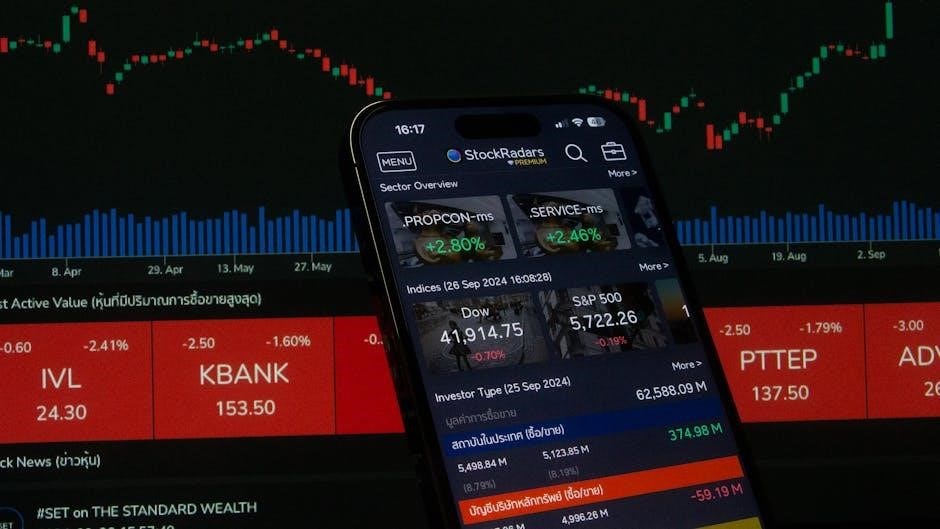
Identifying Stocks to Trade Alongside QQQ Options
PDF guides suggest AAPL, MSFT, NVDA, GOOGL, and META as complementary trades with QQQ options, leveraging sector correlation for diversified strategies.
Technology Sector Stocks (AAPL, MSFT, NVDA)
PDF resources and market analysis frequently highlight Apple (AAPL), Microsoft (MSFT), and NVIDIA (NVDA) as key stocks to trade in conjunction with Invesco QQQ Trust (QQQ) options. These companies represent significant weightings within the Nasdaq 100, meaning their performance heavily influences QQQ’s price action.
Traders often employ strategies like delta hedging or correlation trades, capitalizing on the relationship between these individual stocks and the QQQ ETF. For example, a bullish outlook on NVDA might be paired with a long QQQ call option, amplifying potential gains. Conversely, a protective put strategy on QQQ could be implemented alongside short positions in AAPL or MSFT if a broader market downturn is anticipated.
Understanding the specific correlations and volatility characteristics of each stock is crucial for successful implementation. Backtesting and simulation tools, as mentioned in available resources, are invaluable for refining these combined trading strategies.
Correlation Analysis: QQQ and its Constituents
PDF guides emphasize that a thorough correlation analysis is vital when trading QQQ options alongside individual stocks. The QQQ’s performance is intrinsically linked to its top holdings – AAPL, MSFT, NVDA, GOOGL, and META – but the strength of these correlations fluctuates.
High positive correlation suggests that movements in these stocks will mirror QQQ’s direction, making them suitable for directional strategies. However, relying solely on correlation can be misleading. Diversification within the Nasdaq 100 is key, and understanding how individual stocks react to broader market shifts is crucial.
Resources like Market Clubhouse provide tools and insights to assess these relationships. Traders can use this data to construct strategies that exploit anticipated divergences or reinforce existing trends, optimizing risk-adjusted returns when combining QQQ options with stock positions.
Trading GOOGL and META with QQQ Options
PDF materials highlight GOOGL and META as frequently traded stocks in conjunction with QQQ options, due to their significant weighting within the index. Analyzing their individual performance relative to QQQ allows for refined trading strategies. For example, if GOOGL or META are underperforming QQQ, a trader might employ a relative value spread, buying QQQ options and selling options on the lagging stock.

Conversely, strong performance in either stock could justify a bullish QQQ options strategy, anticipating continued index growth. Market Clubhouse’s resources suggest monitoring proprietary formulas that incorporate these key constituents.
However, remember that sector-specific news and earnings reports can disrupt correlations. Therefore, a robust risk management plan, including stop-loss orders, is essential when combining QQQ options with trades in GOOGL and META, as outlined in various educational materials.
TSLA and its Relationship to QQQ
PDF guides often address TSLA’s unique position when trading alongside QQQ options. While a significant component of the Nasdaq 100, TSLA’s volatility frequently diverges from the broader index. This creates opportunities for traders, but also introduces heightened risk. Some strategies involve using TSLA options to hedge QQQ positions, capitalizing on potential inverse correlations.
For instance, if anticipating a market correction, a trader might buy put options on TSLA while holding QQQ call options, aiming to offset losses. However, the historical data referenced in various reports indicates TSLA’s movements aren’t always predictable in relation to QQQ.
Market Clubhouse’s morning memos emphasize careful monitoring of TSLA’s performance, particularly around earnings releases. Effective position sizing and a clear understanding of volatility are crucial when incorporating TSLA trades with QQQ options strategies.

Advanced QQQ Options Trading Techniques
PDF resources explore complex strategies; delta hedging and iron condors can refine QQQ option trades, while understanding volatility is key for optimal risk management.
Delta Hedging Strategies
Delta hedging aims to neutralize directional risk in an options portfolio. Utilizing PDF guides, traders can learn to dynamically adjust positions in underlying assets – like AAPL, MSFT, or NVDA – to offset the delta of their QQQ options. This involves continuously rebalancing the hedge as the option’s delta changes with price movements.

The core principle is to maintain a delta-neutral position. For example, if short a QQQ call option (positive delta), a trader would buy shares of QQQ or correlated stocks to create a negative delta, effectively canceling out the option’s exposure. Conversely, shorting shares hedges short QQQ puts (negative delta).
Successful delta hedging requires frequent monitoring and adjustments, as delta is not static. Backtesting tools and simulation platforms, often found in downloadable PDF format, are invaluable for practicing and refining these strategies before deploying them with real capital. Fidelity’s Trading Strategy resources also offer insights.
Iron Condors and Butterfly Spreads
Iron condors and butterfly spreads are neutral options strategies benefiting from limited price movement in QQQ. PDF guides detail constructing these spreads using QQQ options with varying strike prices and expiration dates. These strategies involve four options legs – buying and selling both calls and puts – to define a profit range.
When implementing these, consider correlated stocks like GOOGL and META. While not directly part of the spread, monitoring their performance can offer insights into broader market sentiment affecting QQQ. A successful trade relies on QQQ remaining within the defined profit zone at expiration.
Backtesting, often facilitated by downloadable PDF resources and simulation tools, is crucial. Market Clubhouse provides resources for analyzing these complex trades. Remember, these strategies have limited profit potential but also defined risk, making them suitable for range-bound market expectations. Careful position sizing is vital.
Calendar Spreads with QQQ Options
Calendar spreads, also known as time spreads, involve buying and selling QQQ options with the same strike price but different expiration dates. PDF guides often illustrate this strategy, capitalizing on time decay – theta – as the near-term option expires. This benefits from stable QQQ pricing.
Complementary trades often involve observing technology sector stocks like AAPL and MSFT. While not directly integrated into the calendar spread, their movements can indicate broader market trends influencing QQQ’s price action. Monitoring these provides contextual awareness.
Fidelity’s Trading Strategy resources highlight the importance of selecting appropriate expiration dates. Backtesting, using simulation tools detailed in some PDFs, helps refine spread parameters. Remember, profit is generated if QQQ remains relatively stable near the strike price. Careful consideration of implied volatility (IV) is also key to success.

Risk Management in QQQ Options Trading
PDF guides emphasize position sizing and stop-loss orders, crucial for managing risk when trading QQQ options alongside stocks like AAPL, MSFT, or NVDA.
Position Sizing and Capital Allocation
Effective position sizing is paramount when implementing options strategies alongside QQQ, particularly when considering complementary stock trades. PDF resources highlight the importance of allocating capital prudently, often suggesting a percentage-based approach rather than fixed dollar amounts. This minimizes risk exposure.
When trading stocks like AAPL, MSFT, NVDA, GOOGL, or META in conjunction with QQQ options, determine your risk tolerance and allocate a smaller percentage of your portfolio to individual positions. Consider the correlation between QQQ and these stocks; higher correlation may necessitate smaller allocations. Diversification across multiple sectors can further mitigate risk. Backtesting, utilizing simulation tools, can help refine position sizes based on historical data and potential market scenarios. Remember, over-leveraging can quickly deplete capital, even with seemingly sound strategies.
Always factor in potential margin requirements and transaction costs when calculating position sizes. A conservative approach, especially for beginners, is recommended.
Understanding Volatility (IV) and its Impact
Implied Volatility (IV) significantly influences option pricing, and understanding its impact is crucial when trading QQQ options alongside complementary stocks. PDF guides emphasize that higher IV generally leads to more expensive options, while lower IV results in cheaper options. This impacts strategy selection and potential profitability.
When considering trades with AAPL, MSFT, or TSLA alongside QQQ, analyze the IV differences. If a stock’s IV is relatively high compared to QQQ, options may be overpriced, potentially favoring selling strategies. Conversely, lower IV might suggest buying opportunities. Market Clubhouse resources highlight how IV spikes often occur during earnings announcements or significant market events.
Remember that IV is not a predictor of future price direction, but rather a measure of market expectation of price fluctuation. Monitoring the VIX (Volatility Index) can provide broader market context. Utilizing backtesting tools can demonstrate how different IV levels have historically impacted strategy performance.
Using Stop-Loss Orders
Implementing stop-loss orders is paramount for risk management when trading QQQ options and related stock positions like AAPL, MSFT, or GOOGL. PDF resources on options strategies consistently stress the importance of defining maximum acceptable losses before entering a trade. A stop-loss order automatically exits a position when a predetermined price is reached, limiting potential downside.
For example, if employing a covered call strategy on QQQ, a stop-loss on the underlying stock can protect against unexpected price declines. Similarly, when trading options on TSLA alongside QQQ, a stop-loss on the option position can cap losses if the trade moves against you. Fidelity’s Trading Strategy resources advocate for dynamic stop-losses, adjusting them as the trade evolves.

Consider volatility when setting stop-loss levels; wider stops may be necessary in volatile markets to avoid premature exits. Backtesting can help determine optimal stop-loss placement based on historical price action.

Resources for QQQ Options Trading
PDF guides detail strategies for hedging QQQ with stocks like AAPL and MSFT, while Market Clubhouse and Fidelity offer tools for backtesting and analysis.
PDF Guides and Educational Materials
Numerous PDF guides delve into complementary stock trades when utilizing QQQ options. These resources frequently highlight the benefits of pairing QQQ option strategies with positions in its top holdings – notably AAPL, MSFT, and NVDA. A common theme is using these stocks to refine delta-neutral or delta-hedged positions, capitalizing on correlations within the Nasdaq 100.
Several papers explore incremental hedging strategies, particularly focusing on stock options to mitigate risk associated with QQQ option trades. These guides often demonstrate how to construct protective put strategies using individual stocks alongside QQQ puts, or how covered calls on stocks can enhance income generation when employing QQQ covered calls.
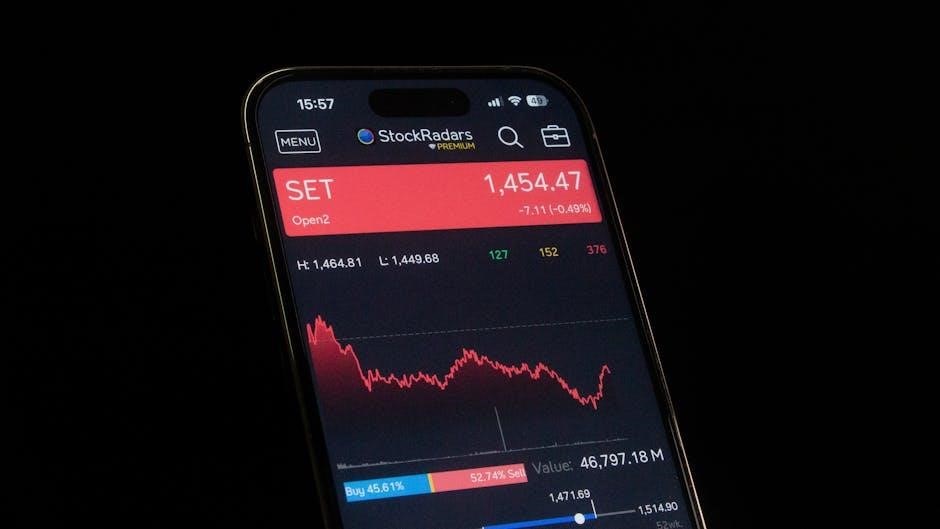
Furthermore, some PDFs detail the application of options on GOOGL and META in conjunction with QQQ, analyzing their correlation and potential for spread trades. Understanding these relationships, as outlined in these materials, is crucial for informed decision-making.
Backtesting and Simulation Tools
Backtesting platforms allow traders to rigorously evaluate strategies combining QQQ options with complementary stock trades. Simulations can demonstrate the historical performance of, for example, a QQQ covered call overlaid with long positions in AAPL and MSFT, assessing risk-adjusted returns. These tools help validate strategies suggested in PDF guides focusing on incremental hedging.
Many platforms enable users to model scenarios involving straddles or strangles on QQQ alongside directional trades on NVDA or TSLA, testing the effectiveness of these combinations under various market conditions. Analyzing historical volatility and correlation data is key to optimizing these simulations.
Furthermore, tools can simulate delta-hedging strategies, showcasing how frequently stock positions (like GOOGL or META) need adjusting to maintain neutrality when trading QQQ options. This practical application of theoretical concepts from PDF resources is invaluable for refining trading plans and managing risk effectively.
Market Clubhouse and Fidelity Trading Strategy Resources
Market Clubhouse’s Morning Memo frequently discusses trading SPY, QQQ, AAPL, MSFT, NVDA, GOOGL, META, and TSLA – highlighting potential synergistic trades with QQQ options. Their proprietary formula can identify opportunities to enhance returns or hedge risk. Fidelity’s Trading Strategy resources offer educational materials and tools for options trading, including strategies applicable to the Nasdaq 100.
Both platforms emphasize the importance of understanding correlation between QQQ and its constituent stocks. PDF guides detailing options strategies can be complemented by Fidelity’s analysis of individual stock movements. For example, a protective put on QQQ might be combined with a long position in a tech stock like AAPL, anticipating relative outperformance.
Exploring resources from both sources can reveal insights into utilizing QQQ options to capitalize on anticipated sector trends or mitigate portfolio risk, particularly when considering trades in high-growth stocks like TSLA or established giants like Microsoft.
 playground aron beauregard read online free pdf
  trails a and b pdf
  rounding decimals worksheet pdf
  jesus in the talmud pdf
  the very hungry caterpillar printables pdf free
  ged social studies practice test pdf
  bio bidet bb 2000 manual
  white and rodgers thermostat manual